admin
June 1, 2026
Nature as the Original Designer:
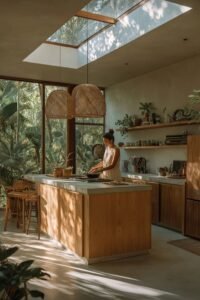
and outside, nature has been designing Travel also takes you outside for millions of years. The veining of a marble cliff face, the gradient of light filtering through a dense forest canopy, the geometry of a beehive or a nautilus shell – these are not accidental. They are the most refined design solutions in existence.
I have learned to look at a field of wild grass and think about texture. I have looked at the bark of an ancient tree and seen a wall finish. I have watched the way a river stone is smoothed by water and understood proportions. A designer who cultivates this habit of observation – who looks at the natural world not as a backdrop but as a teacher – will never run out of ideas.
The Language of Materials:
Every culture has developed its own vocabulary of materials – and travelling through them is like learning a new language with every border you cross. Each one carries a sensory intelligence that no catalogue image can ever fully convey.
You must touch it. You must see how it responds to light, how it ages, how it feels underfoot or against a wall. Even fabric – something we might overlook as a “soft furnishing” – carries an entire world within it. The weight of a silk, the roughness of jute, the warmth of wool: these are not aesthetic choices alone. They are emotional ones. Materials, encountered in their native context, teach you to design with empathy.
A Stone, A Plant, A Story:
I often say to my team: a stone is never just a stone. In the hands of a designer who has truly seen the world, a single piece of rough stone can become a focal wall that speaks of geology and time. It can become a plinth that elevates an object into art. It can become a basin, a step, a threshold – each iteration carrying a different story, a different emotion.
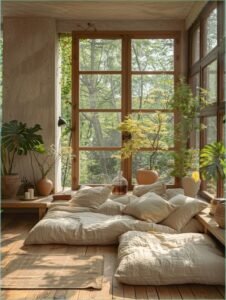
The same is true of a plant. A trailing fig in an old courtyard, a lone cactus in a desert doorway, a moss-covered stone lantern in a Japanese garden – plants are not decoration. They are living punctuation marks in a spatial narrative. They soften. They frame. They breathe. Knowing which plant to place where, and why, is knowledge that comes not from Pinterest boards but from having sat quietly in spaces where plants are used with intention and wisdom.
Travel with Purpose, Design with Soul:
I do not travel as a tourist. I travel as a student. Every ancient city I walk through, every building I enter, every market I linger in – I am cataloguing, questioning, absorbing.
If you are a young designer, my deepest advice to you is this: before you invest in another software subscription or attend another trade fair, book a flight somewhere old. Walk slowly. Sit in spaces that have survived centuries. Let the walls speak to you. Let the light teach you. Let the materials humble you.